

About Programme
The Diploma Course in Early Childhood Learning is a comprehensive professional programme designed to prepare educators with advanced knowledge, practical skills, and classroom competencies required to support children’s holistic development during the early years. The programme explores child development, learning domains, literacy and numeracy, pedagogical practices, child psychology, health and safety, and STEAM education. Through a combination of theoretical understanding, practical application, workplace learning, and reflective practice, learners develop the confidence to create safe, engaging, inclusive, and developmentally appropriate learning environments for young children.
What Will You Learn?
Understand child growth, development, and learning in the early years.
Support children's social, emotional, cognitive, language, and physical development.
Design engaging, inclusive, and developmentally appropriate learning experiences.
Foster foundational literacy, numeracy, and school readiness skills.
Apply effective pedagogical practices and classroom management strategies.
Promote children's health, safety, well-being, and safeguarding.
Integrate STEAM learning to encourage creativity, inquiry, and problem-solving.
Collaborate with families and communities to support holistic child development.
Placement opportunities for top-performing candidates.
Programme Modules
01Physical, Mental, Motor & Perceptual Development of Child
Learning Points
- Introduction to Child Development
- Physical Development
- Motor Development (Gross & Fine Motor Skills)
- Mental (Cognitive) Development
- Perceptual Development
- Developmental Milestones
- Role of Play in Development
- Observation and Assessment
Learning Hours
32 (Directed Learning), 32 (Job Embedded Learning), 16 (Self & Collaborative Learning)
Assessment
Workplace Practical (40%), Viva (30%), Reflective Journal (30%)
02Socio, Emotional, Ethical, and Cultural Context & Developmental Areas at Foundational Stage
Learning Points
- Understanding Development in the Foundational Stage
- Social Development of Young Children
- Emotional Development and Well-being
- Ethical and Moral Development
- Cultural Context and Diversity
- Inclusive Education and Equity
- Building Positive Classroom Climate
- Family and Community Engagement
Learning Hours
32 (Directed Learning), 32 (Job Embedded Learning), 16 (Self & Collaborative Learning)
Assessment
Workplace Practical (40%), Viva (30%), Reflective Journal (30%)
03Development of Learning Domains at the Foundational Stage
Learning Points
- Introduction to Learning Domains
- Language and Literacy Development
- Cognitive Development and Early Thinking Skills
- Early Numeracy Development
- Creative and Aesthetic Development
- Environmental Awareness and Discovery
- Physical Health, Well-being, and Learning
- Approaches to Learning
- Integrating Learning Domains
Learning Hours
32 (Directed Learning), 32 (Job Embedded Learning), 16 (Self & Collaborative Learning)
Assessment
Workplace Practical (40%), Viva (30%), Reflective Journal (30%)
04Development of Literacy and Numeracy at Foundational Stage
Learning Points
- Understanding Foundational Literacy and Numeracy
- Emergent Literacy Development
- Early Reading Development
- Early Writing Development
- Multilingualism and Language Development
- Emergent Numeracy Development
- Developing Mathematical Concepts
- Pedagogies for Literacy and Numeracy
- Assessment of Foundational Literacy and Numeracy
- Family and Community Support for FLN
Learning Hours
32 (Directed Learning), 32 (Job Embedded Learning), 16 (Self & Collaborative Learning)
Assessment
Workplace Practical (40%), Viva (30%), Reflective Journal (30%)
05Pedagogical Practices of Foundational Stage
Learning Points
- Understanding Pedagogy at the Foundational Stage
- Play-Based Pedagogy
- Experiential and Inquiry-Based Learning
- Activity-Based Learning Strategies
- Storytelling and Language-Rich Pedagogy
- Inclusive Pedagogical Practices
- Classroom Interaction and Facilitation Skills
- Learning Environment and Classroom Organization
- Integrating Arts, Movement, and Creativity
- Use of Learning and Teaching Resources
- Reflective Teaching and Professional Practice
Learning Hours
32 (Directed Learning), 32 (Job Embedded Learning), 16 (Self & Collaborative Learning)
Assessment
Workplace Practical (40%), Viva (30%), Reflective Journal (30%)
06Child Psychology & Safety at School
Learning Points
- Foundations of Child Psychology
- Major Theories of Child Development
- Factors Influencing Learning and Behaviour
- Understanding Children’s Behaviour
- Classroom Behaviour Management
- Social and Emotional Well-being
- Trauma-Informed Practices
- Effective Communication with Children
- Understanding Diverse Learning Needs
- Bullying Prevention and Safe School Culture
- Child Protection and Safeguarding
- Health, Safety, and Emergency Preparedness
- Building a Nurturing School Environment
Learning Hours
32 (Directed Learning), 32 (Job Embedded Learning), 16 (Self & Collaborative Learning)
Assessment
Workplace Practical (40%), Viva (30%), Reflective Journal (30%)
07Health & Safety at School in Early Years
Learning Points
- Understanding Health, Safety, and Well-being in Early Years
- Child Growth, Development, and Health
- Hygiene Practices in Early Childhood Settings
- Nutrition and Healthy Living
- Safe Learning Environments
- Health and Safety Policies in Schools
- Child Protection and Safeguarding
- Managing Emergencies and Accidents
- Mental Health and Emotional Safety
- Family and Community Partnerships for Health and Safety
Learning Hours
32 (Directed Learning), 32 (Job Embedded Learning), 16 (Self & Collaborative Learning)
Assessment
Workplace Practical (40%), Viva (30%), Reflective Journal (30%)
08Developing “STEAM” at Early Years
Learning Points
- Introduction to STEAM Education
- Science Learning in Early Years
- Technology in Early Childhood Education
- Engineering Through Play and Design
- Arts Integration in STEAM
- Mathematics in Early Years
- Inquiry-Based and Project-Based STEAM Learning
- Designing Integrated STEAM Experiences
- Assessment in STEAM Learning
- Family and Community Engagement in STEAM
Learning Hours
32 (Directed Learning), 32 (Job Embedded Learning), 16 (Self & Collaborative Learning)
Assessment
Workplace Practical (40%), Viva (30%), Reflective Journal (30%)
Learning Structure for Each Module
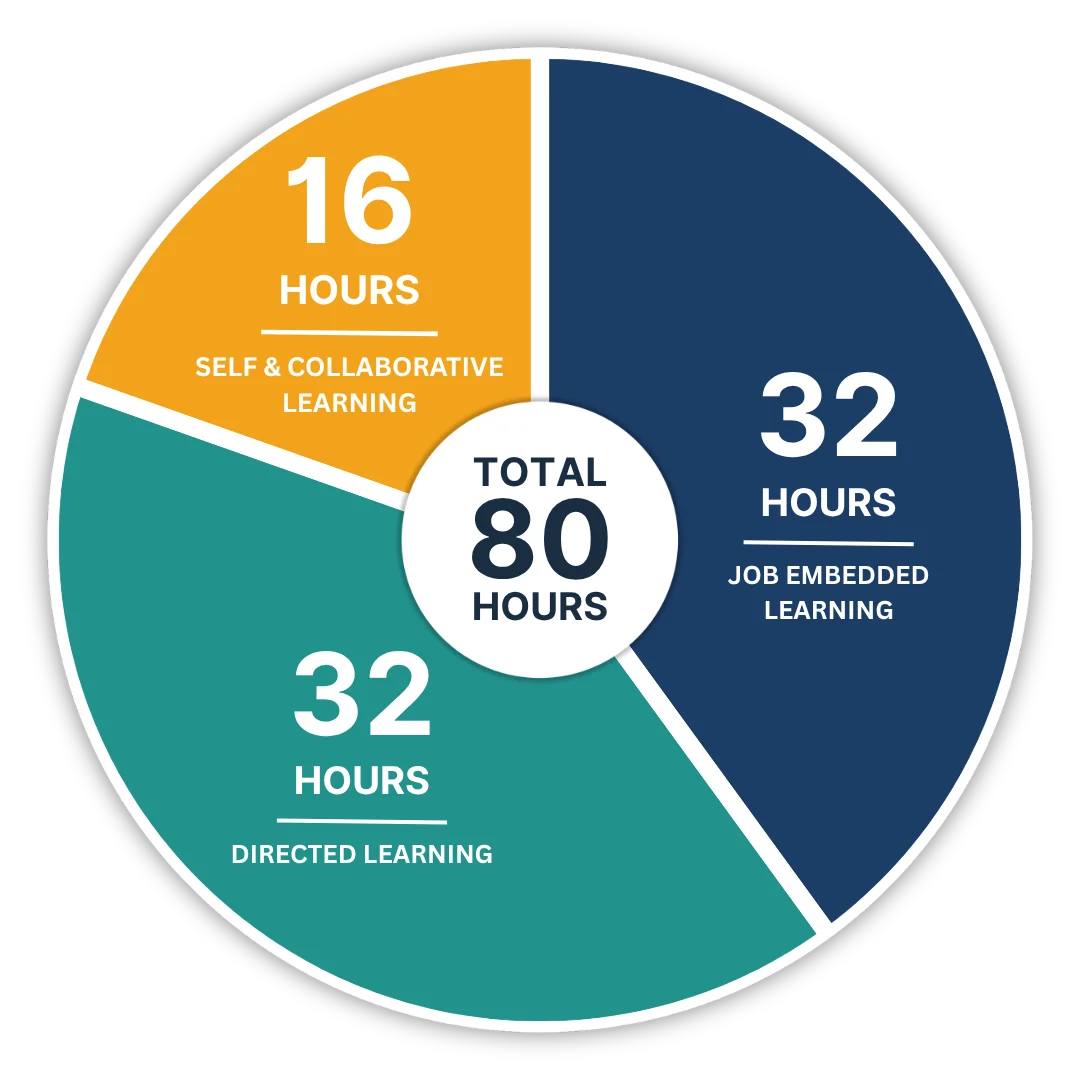
32 Hours of Directed Learning
32 Hours of Job Embedded Learning
16 Hours of Self & Collaborative Learning
Assessment Methodology for Each Module
40%
30%
30%
